

Long hair continues to dominate the beauty landscape in 2026, offering endless possibilities for personal expression while maintaining the elegance and versatility women cherish. The latest haircut trends celebrate movement, texture, and effortless styling through strategic layering techniques and face-framing bangs that enhance natural beauty without sacrificing precious length. Whether you prefer soft romantic waves or sleek straight styles, understanding these twelve trending haircuts helps you make informed decisions creating looks perfectly suited to your lifestyle, face shape, and hair texture.
The evolution of long hair styling reflects broader cultural shifts toward authenticity and low-maintenance beauty routines. Modern techniques emphasize working with natural hair patterns rather than fighting against them, creating cuts that air-dry beautifully while offering versatility for special occasions. Layers add dimension and movement, preventing long hair from appearing heavy or lifeless, while strategic bangs frame facial features and provide youthful freshness. These twelve haircuts represent the perfect intersection of classic elegance and contemporary trends defining 2026.
Butterfly Cut for Maximum Volume
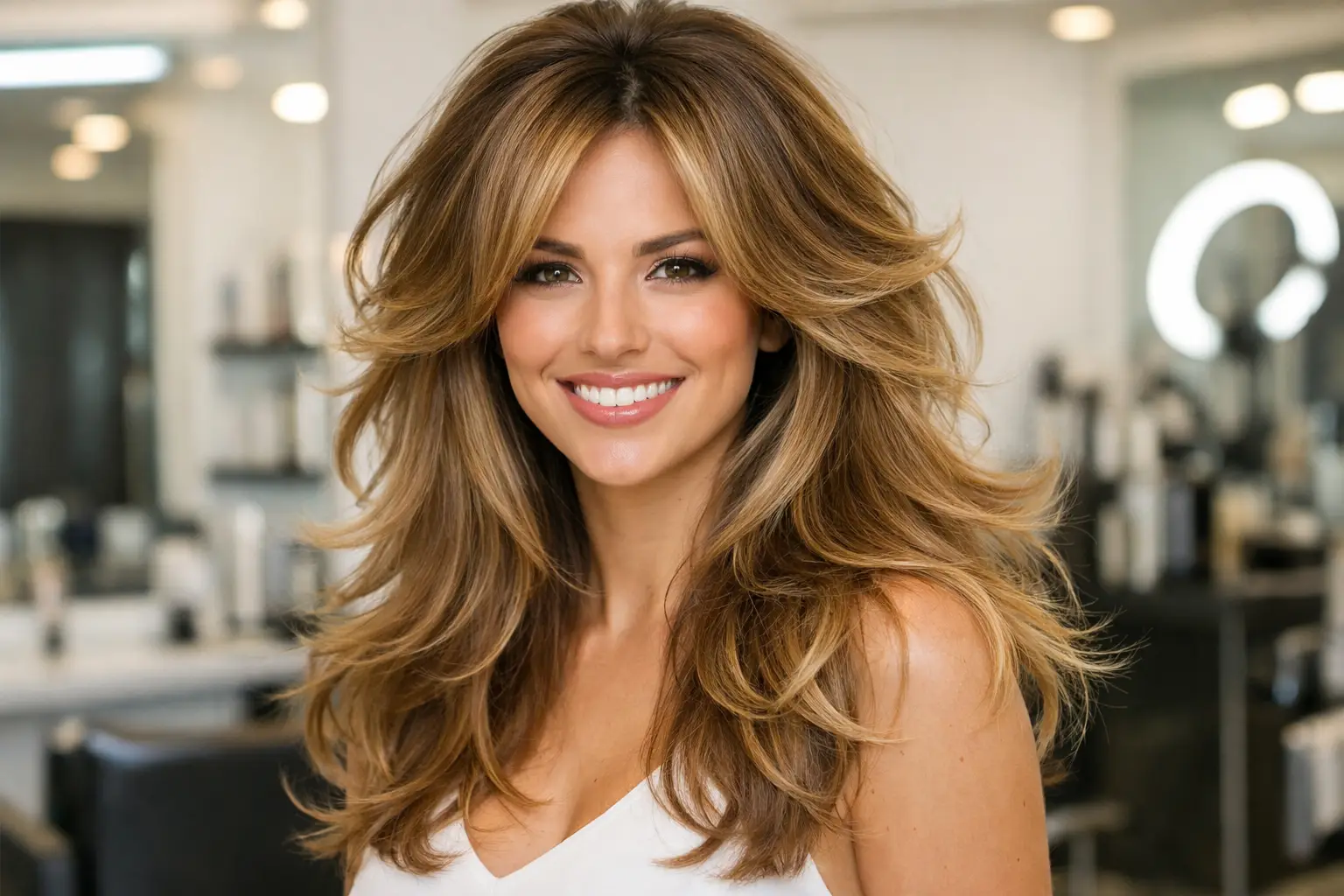
The butterfly cut emerges as 2026’s breakout star, featuring short wispy layers at the crown that cascade into longer flowing lengths resembling butterfly wings. This dramatic technique creates incredible volume at the top while maintaining substantial length throughout the rest of the hair. The cut works exceptionally well for fine to medium hair needing dimension and movement. Celebrities like Sabrina Carpenter and Jennie have popularized this style, proving its versatility across different hair textures. The butterfly cut requires minimal styling, typically just scrunching with mousse or texturizing spray for natural movement.
Classic Long Layers with Curtain Bangs
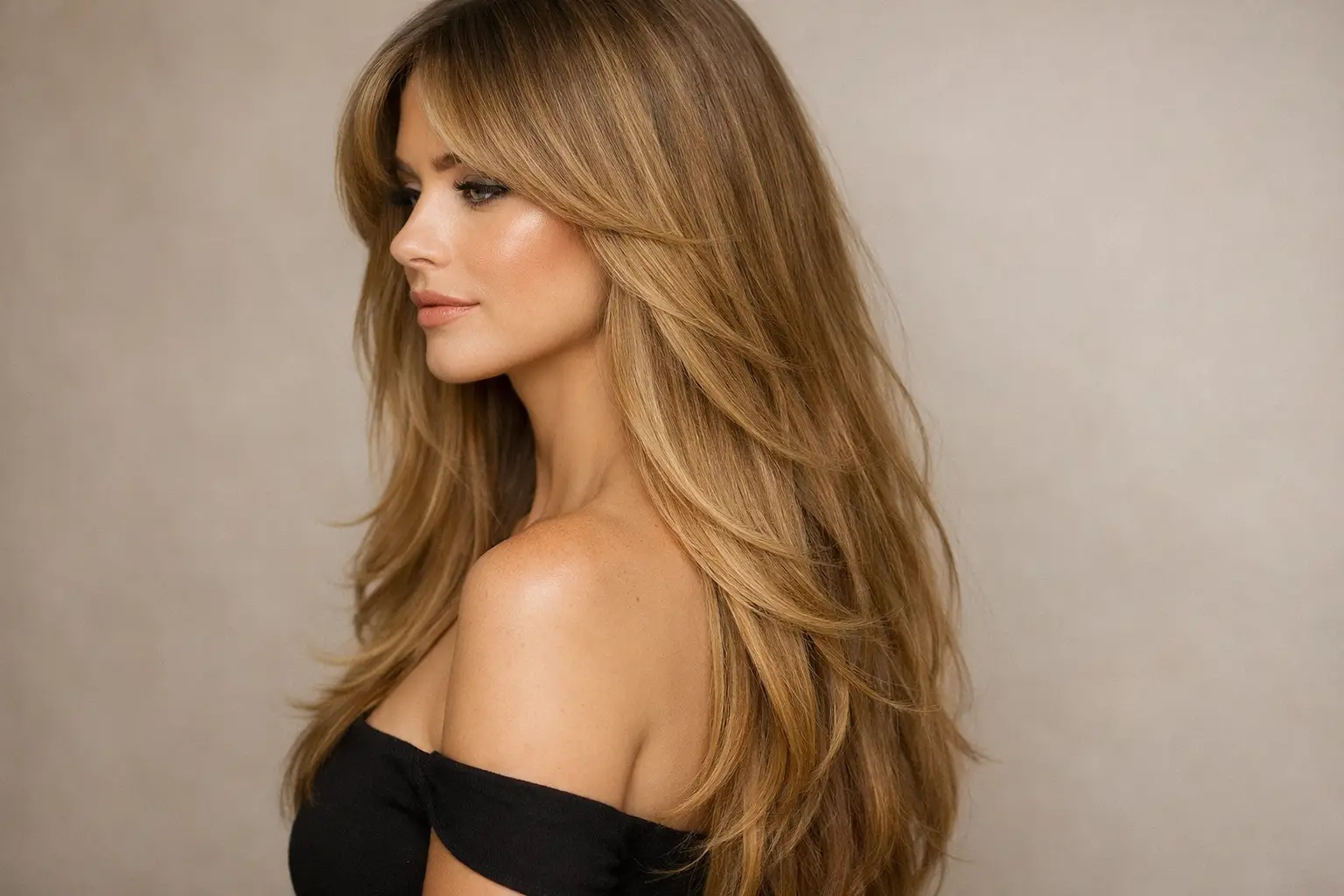
Long layered haircuts paired with curtain bangs remain timeless favorites offering universal flattery and effortless styling. Layers begin around the collarbone, gradually increasing length toward the ends, creating flowing movement without dramatic shape changes. Curtain bangs part naturally down the middle, sweeping softly across the forehead and blending seamlessly into face-framing layers. This combination suits all face shapes, with the bangs providing subtle contouring while layers add bounce and prevent heaviness. Maintenance proves straightforward, requiring trims every eight to ten weeks to maintain shape and prevent split ends.
Face Framing Layers for Soft Definition
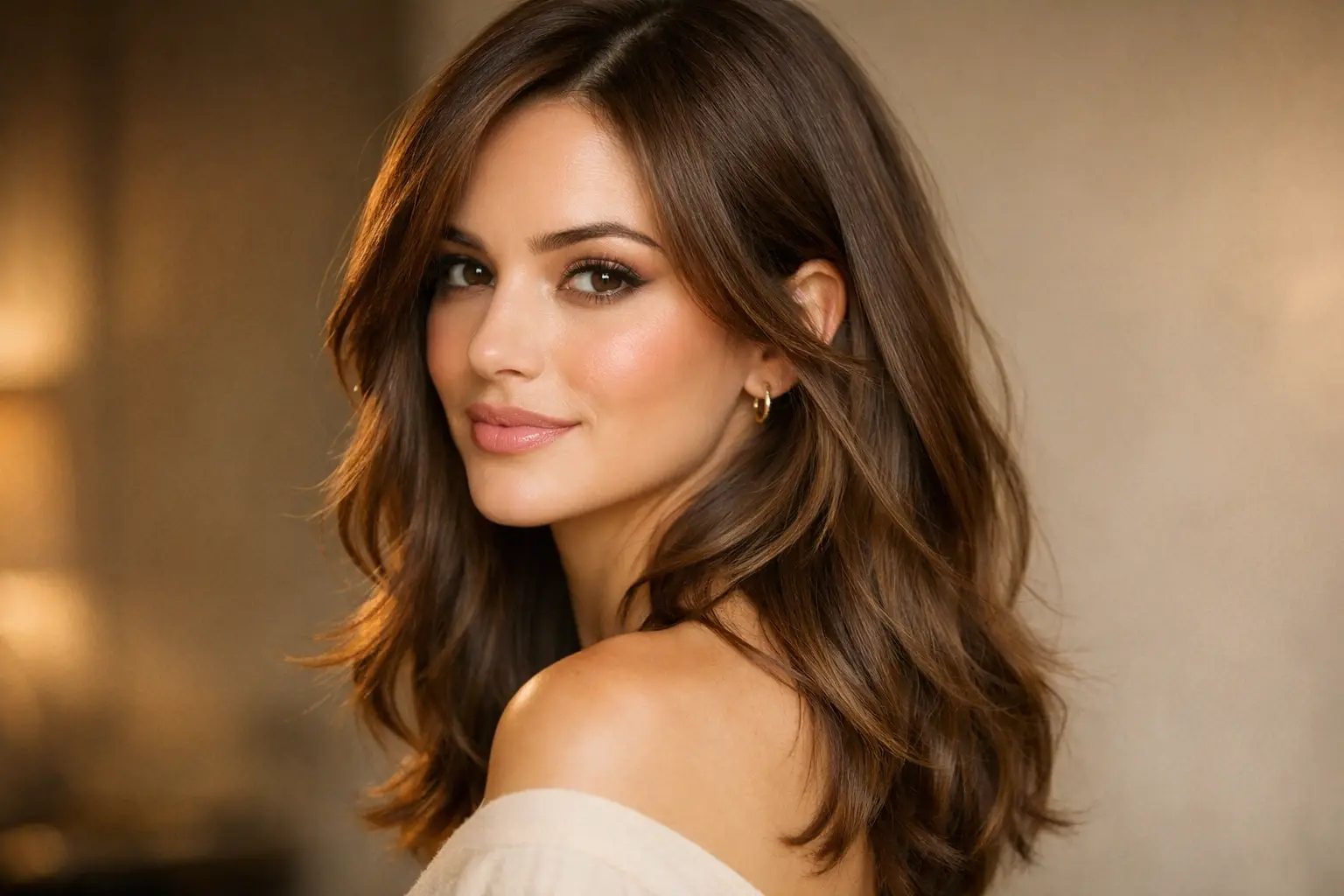
Face framing layers strategically start at cheekbone level, creating gentle contouring that highlights best features while softening stronger jawlines or wider foreheads. These layers blend gradually into longer lengths, avoiding harsh lines or obvious cutting patterns. The technique works beautifully with wavy or straight hair, adding dimension through subtle graduation. Face framing proves particularly flattering for round or square face shapes, creating the illusion of length and structure. Style with a flat iron curving slightly inward for polished looks or embrace natural texture for relaxed everyday wear.
Wavy Shag with Feathered Ends
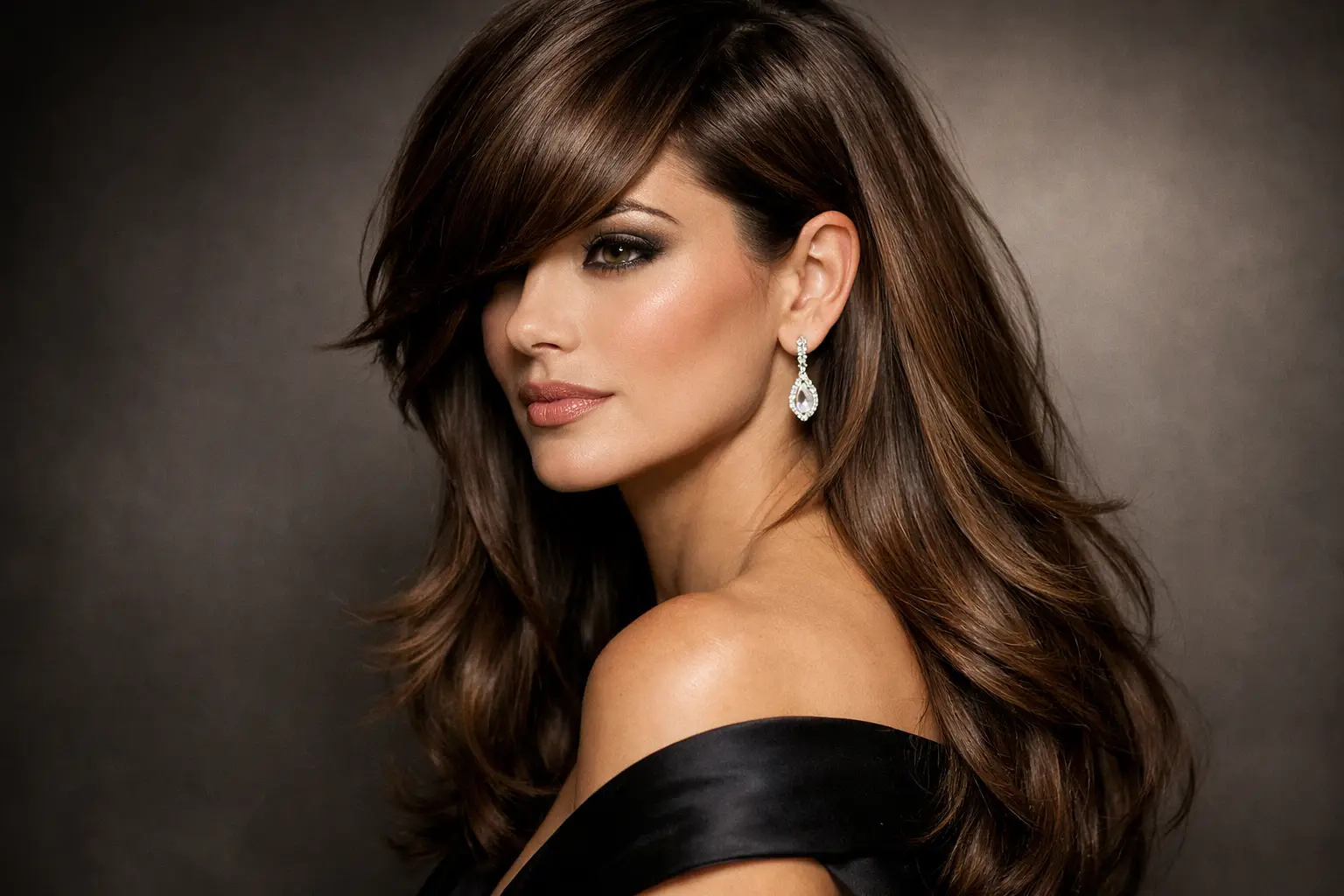
The modern shag haircut receives a gentler update for 2026, trading harsh choppy layers for soft feathered textures creating easy movement and volume. This cut features layers throughout the length, with particular emphasis on creating lift around the crown while maintaining substantial length. Feathered ends prevent bluntness, allowing hair to move naturally and catch light beautifully. The wavy shag suits medium to thick hair, offering the perfect solution for those wanting texture without commitment to dramatic style changes. Air-dry with sea salt spray for effortless beachy waves or use a diffuser for more defined texture.
90s Supermodel Layers for Glamorous Volume
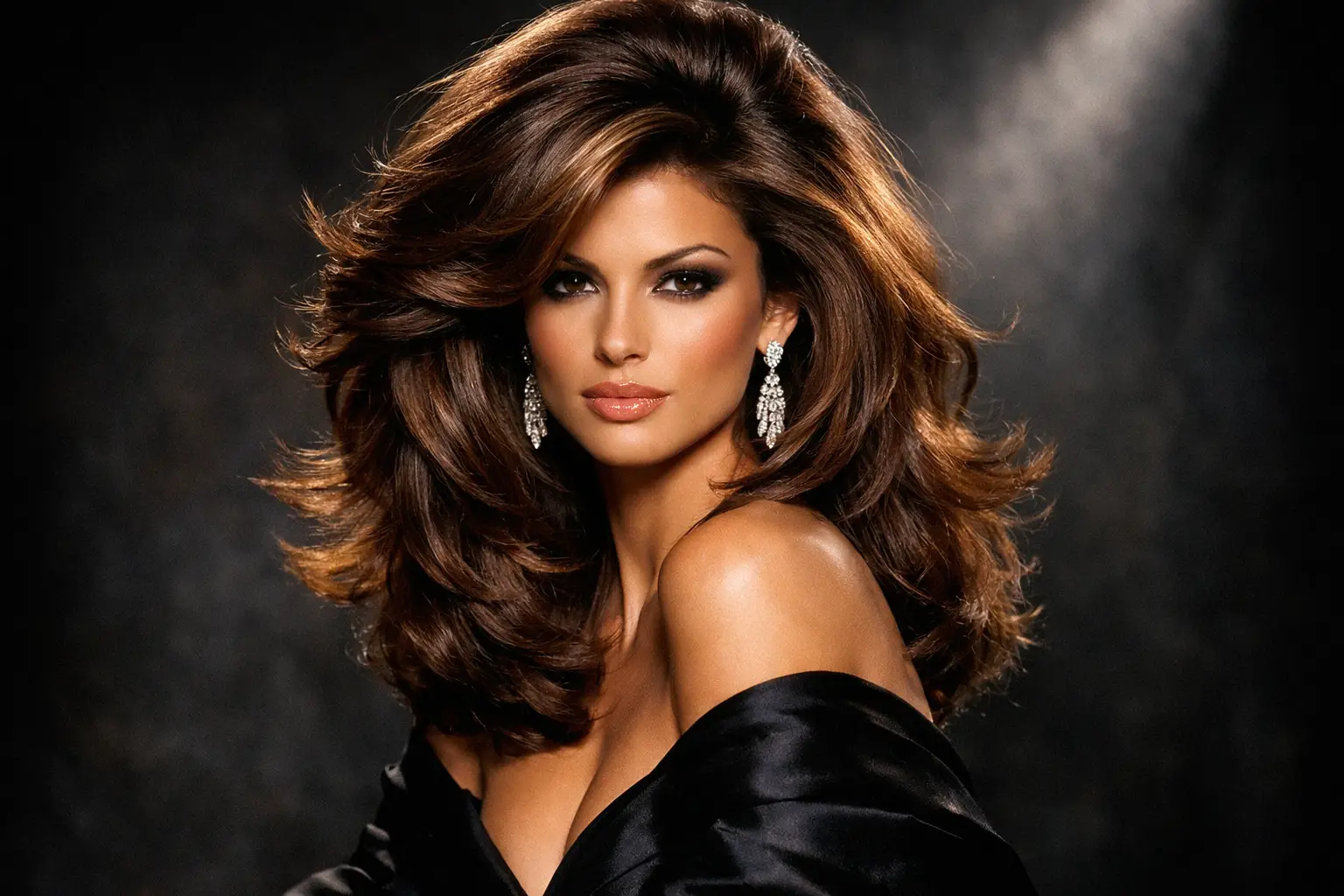
Inspired by iconic supermodels like Cindy Crawford and Claudia Schiffer, this cut features bouncy voluminous layers starting at the chin and cascading to create glamorous movement. The technique emphasizes creating maximum lift at the crown while maintaining fullness throughout the length. This style requires more styling effort than other options, typically involving blow-drying with a round brush or using large barrel curlers. The result delivers red-carpet-worthy glamour perfect for special occasions while remaining wearable for everyday life. Use volumizing mousse at roots and heat protectant throughout for best results.
V Cut for Dramatic Shape
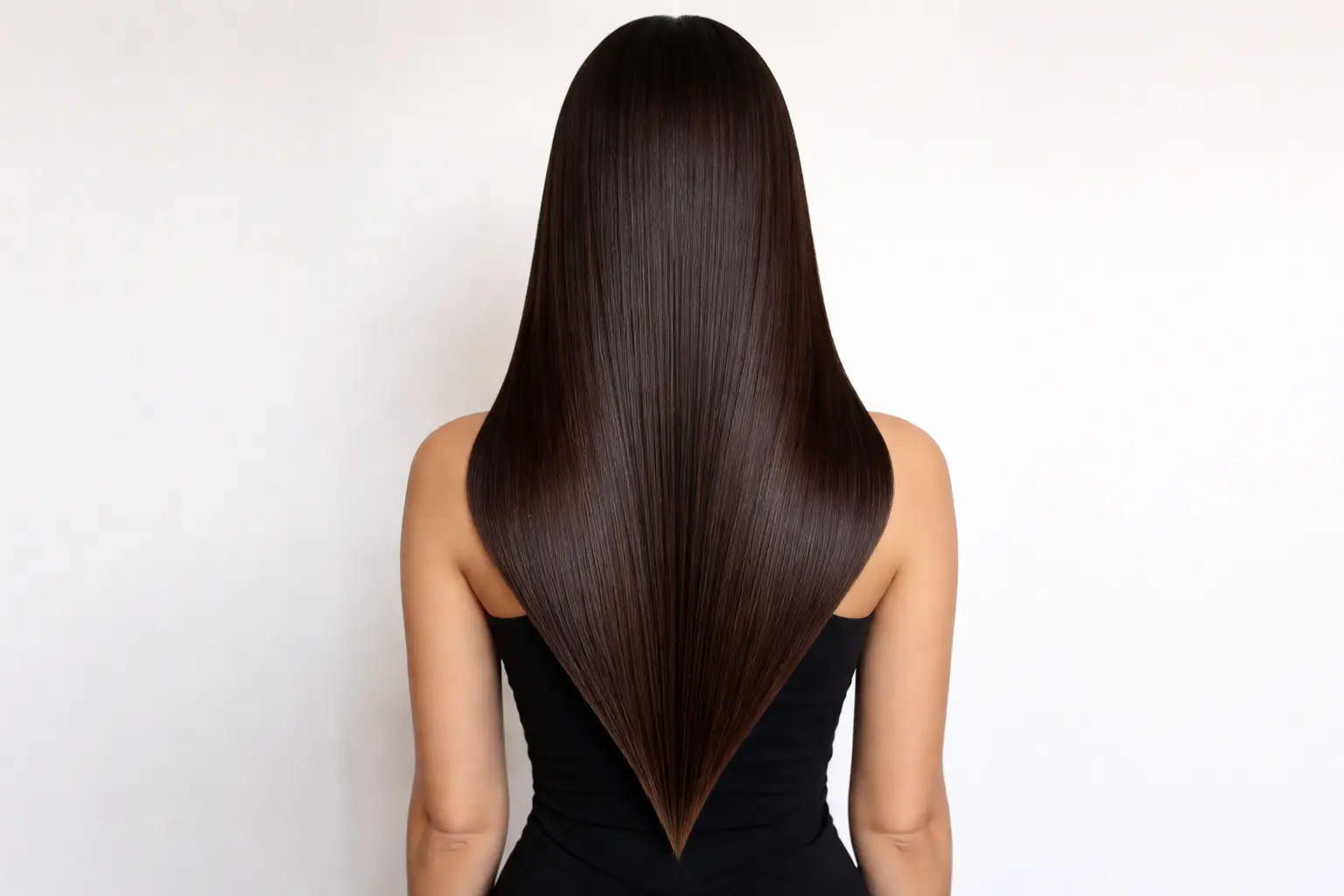
The V cut creates distinctive angular shaping, tapering hair into a sharp V point at the back. This technique adds visual interest while maintaining maximum length at the center, creating fuller appearance despite removing weight from sides. The V cut works particularly well for thick hair needing shape without losing substantial length. Minimal layering throughout keeps focus on the dramatic point, though some face-framing layers complement the overall look. This low-maintenance style requires trimming every eight weeks to maintain crisp definition.
U Cut with Soft Rounded Edges
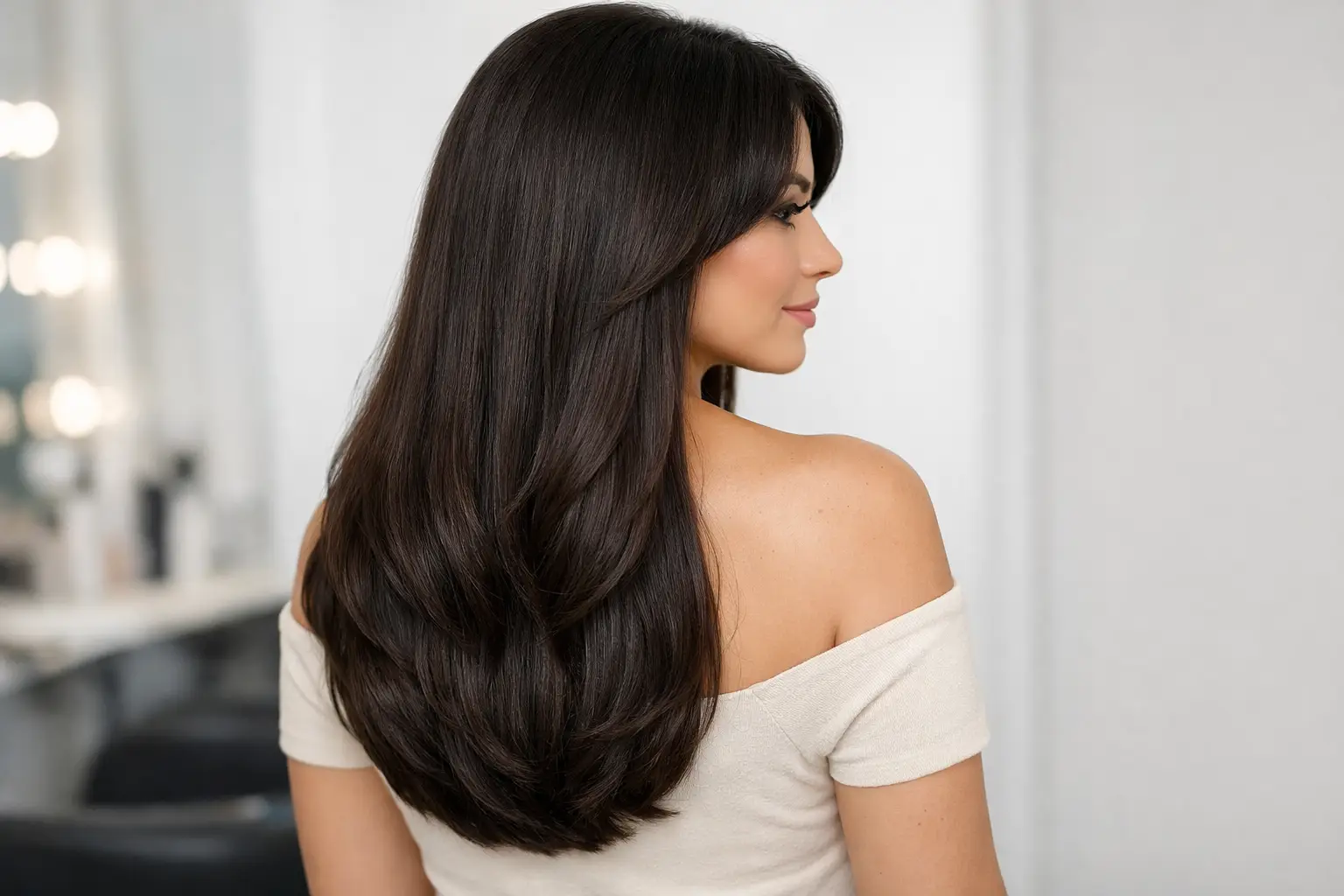
The U cut offers a gentler alternative to the V cut, creating soft rounded shaping at the ends rather than angular points. This technique suits those wanting subtle shaping without dramatic statements, working beautifully with wavy or curly hair where natural texture enhances the rounded silhouette. The U cut adds gentle movement while preventing hair from appearing too blunt or heavy. Pair with long layers for additional dimension or keep relatively one-length for sleek sophisticated looks. This versatile cut adapts to various styling preferences from straight and polished to naturally textured.
Wolf Cut for Edgy Texture
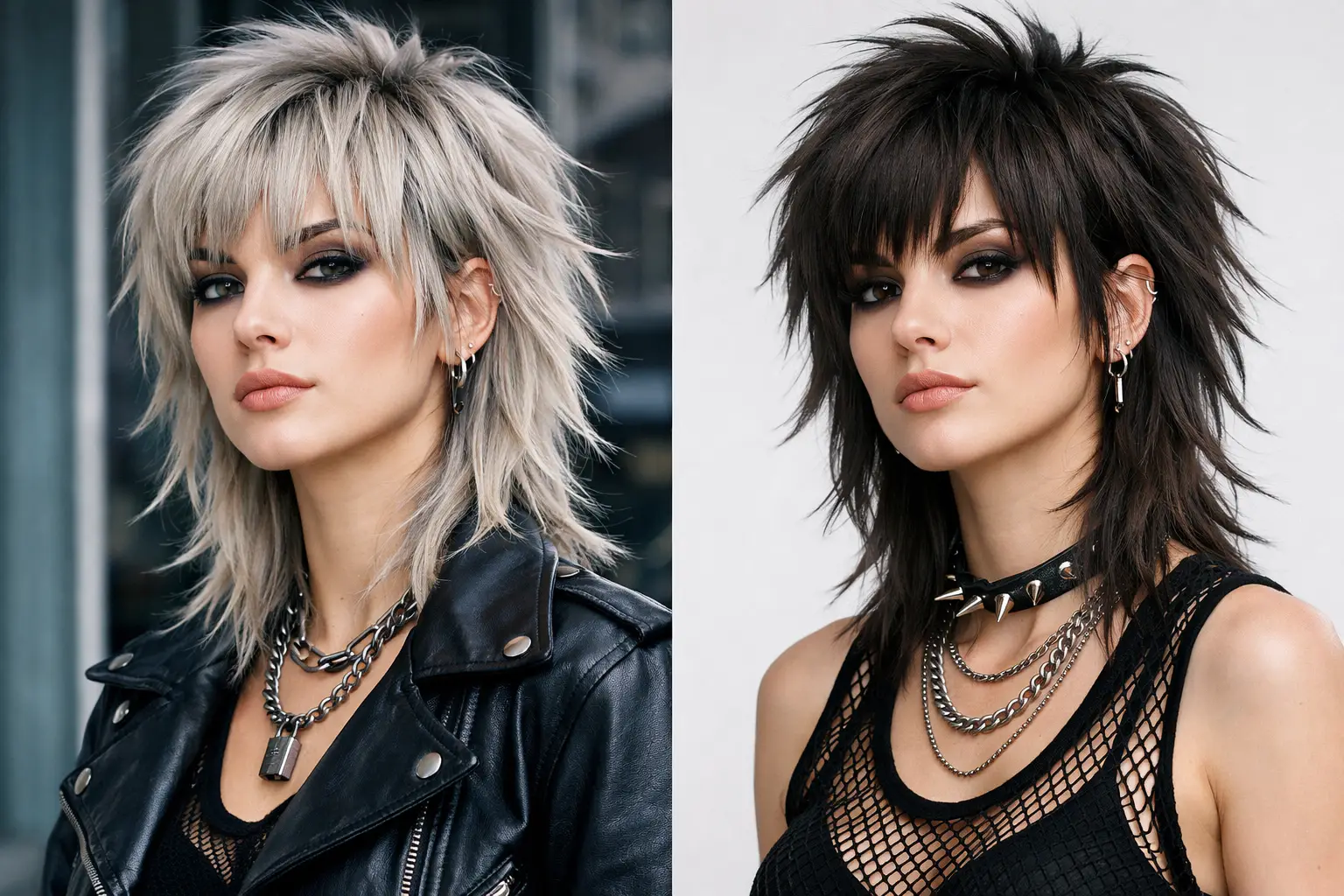
The wolf cut blends shaggy layering with mullet-inspired proportions, creating bold textured looks perfect for those wanting edgy modern styling. Choppy layers throughout add significant volume and movement, with particular emphasis on creating lift at the crown. This cut works exceptionally well for thick hair, removing weight while maintaining interesting shape. The wolf cut requires confidence to wear, making strong fashion statements through deliberate messiness and unconventional proportions. Style with texturizing products for piece-y definition or embrace natural air-drying for authentic lived-in texture.
Birkin Bangs with Loose Layers
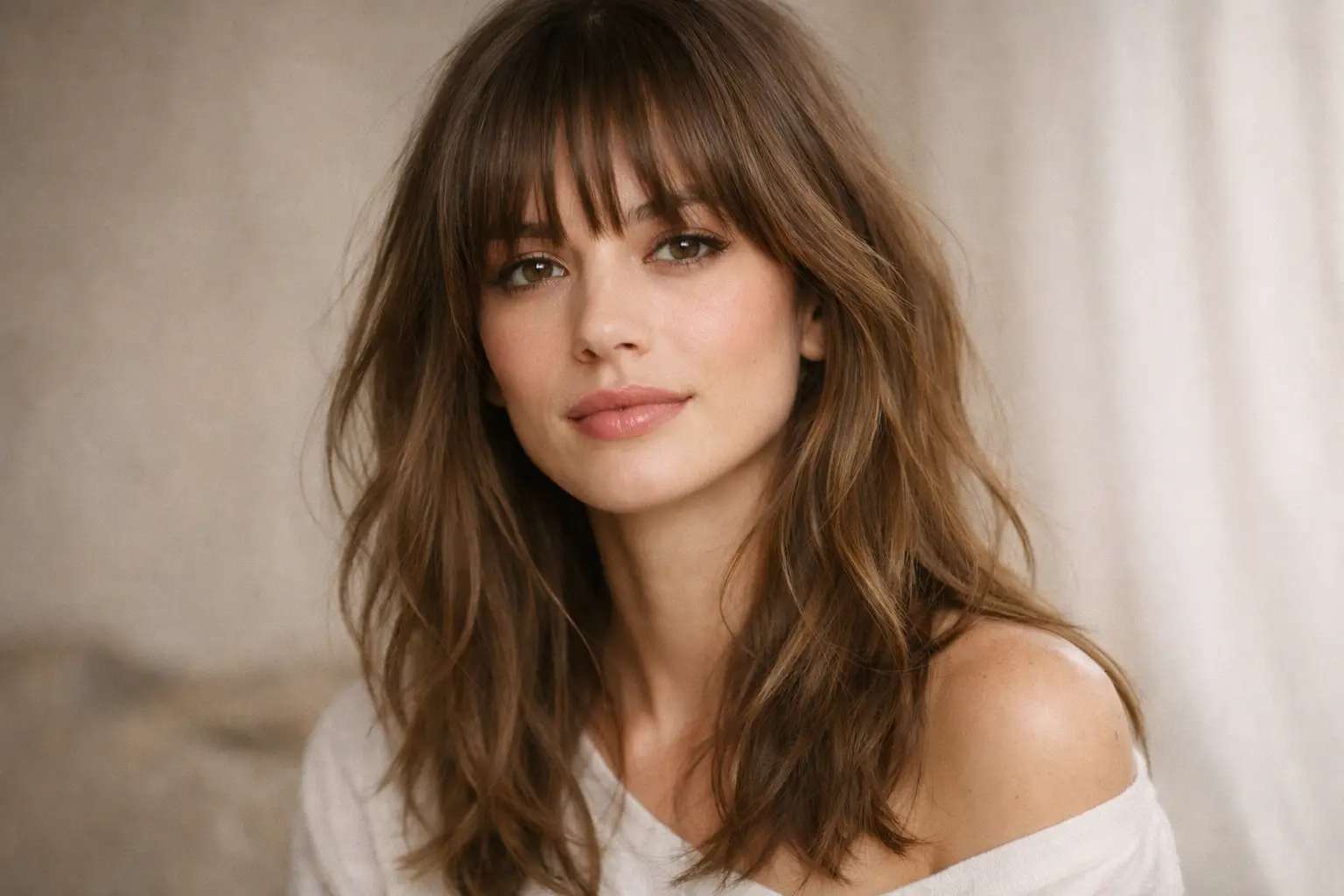
Named after style icon Jane Birkin, these effortlessly cool bangs feature wispy, eyebrow-grazing fringe with slightly uneven texture. Paired with loose flowing layers, this combination creates quintessential French-girl chic requiring minimal styling while looking perpetually fashionable. Birkin bangs grow out gracefully, avoiding awkward in-between phases that plague other bang styles. The loose layers add movement without structured precision, emphasizing natural beauty and easy elegance. This look suits those wanting low-maintenance sophistication with timeless appeal.
Bottleneck Layers for Face Slimming
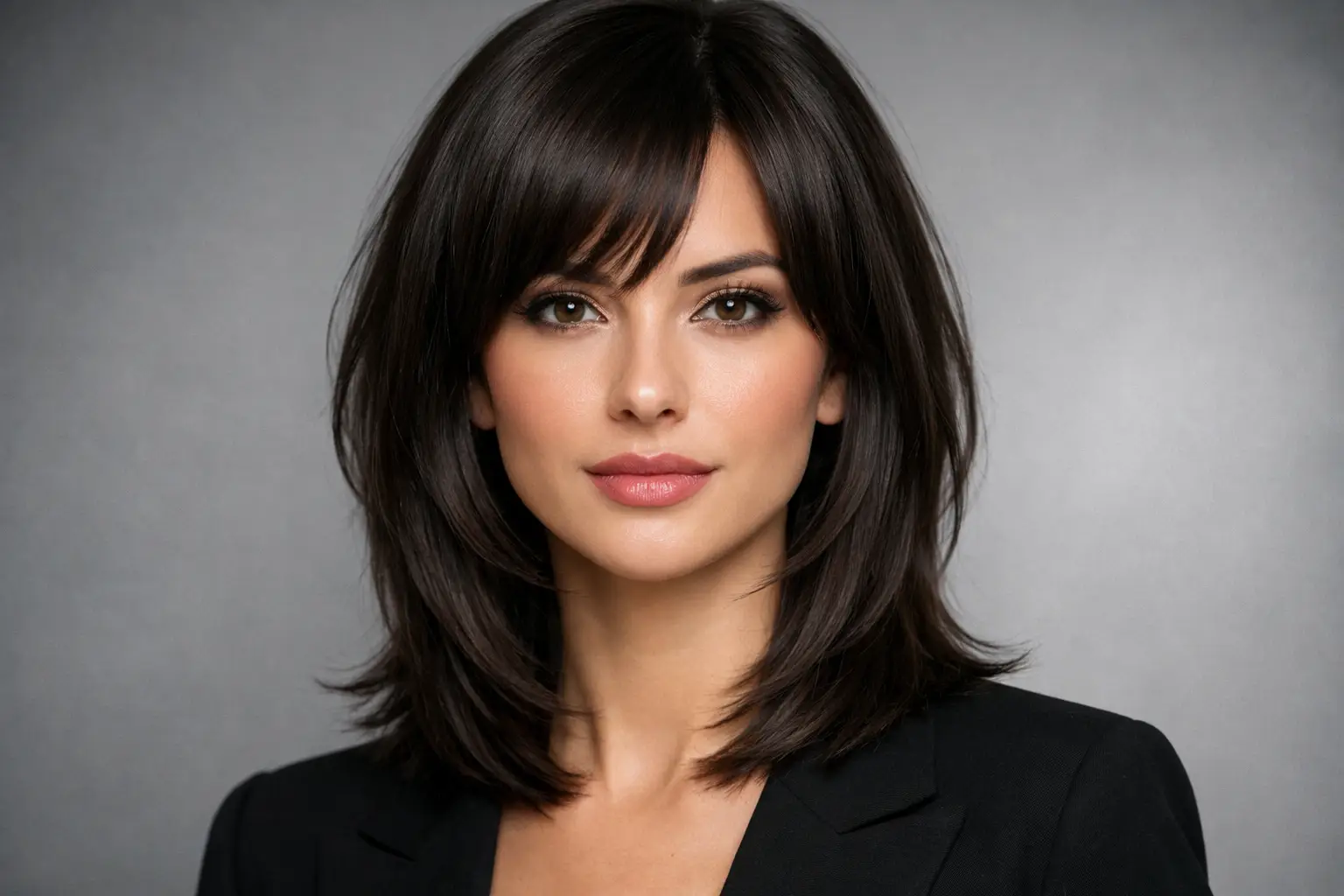
Bottleneck layers create distinctive shaping with the shortest layers hitting around the jawline before gradually lengthening, resembling the shape of a bottle. This technique provides excellent face-slimming effects while adding modern edge to classic long hair. The concentrated layering around the face creates focus and dimension where it matters most, while the rest of the hair maintains substantial length. Bottleneck layers work beautifully with both straight and wavy textures, offering versatility in styling while maintaining distinctive shape.
Waterfall Layers for Cascading Movement
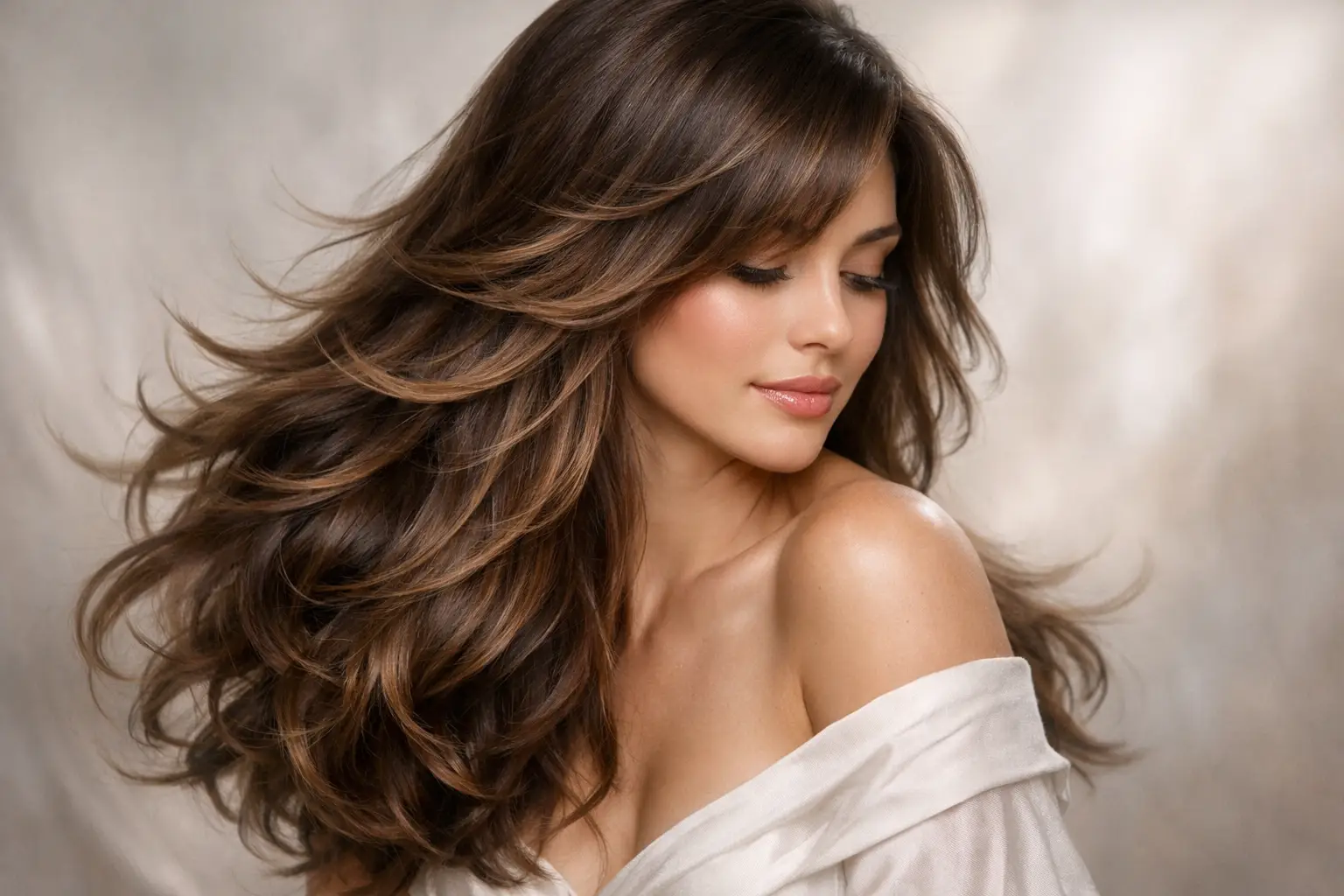
Waterfall layering creates smooth flowing graduation from crown to ends, with layers cascading seamlessly like a waterfall. This technique emphasizes natural movement and bounce, working particularly well for those with natural wave or texture. The graduated layering removes weight strategically, preventing flatness at roots while maintaining fullness throughout. Waterfall layers suit all hair types, adapting beautifully to straight, wavy, or curly textures. Minimal styling required, simply enhancing natural texture with appropriate products for your hair type.
Side Swept Bangs with Long Flowing Layers
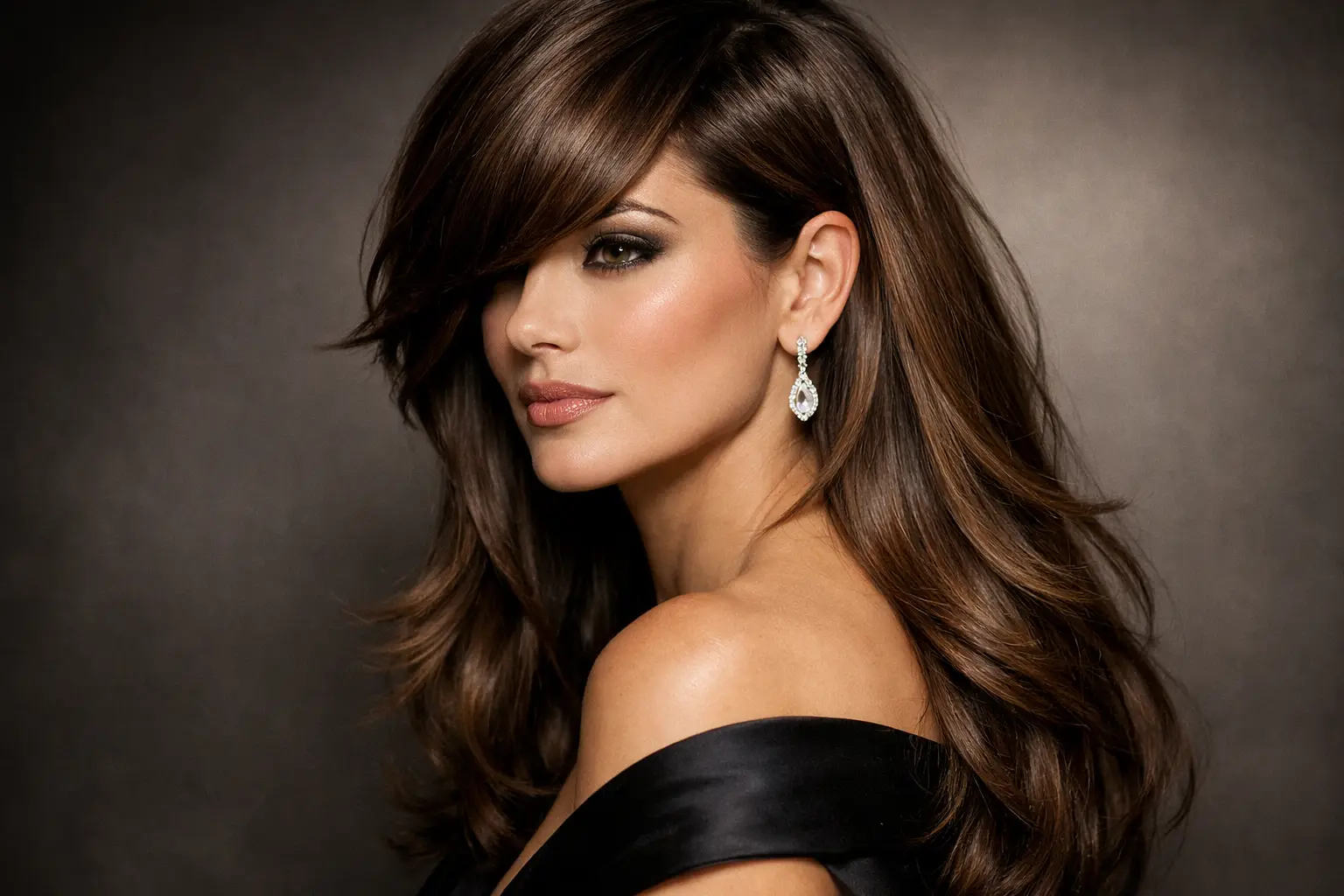
Side swept bangs make a strong comeback in 2026, offering sophisticated alternatives to center-parted styles. Paired with long flowing layers, this combination creates classic elegance with modern appeal. The angled bangs sweep dramatically across the forehead, creating flattering asymmetry while long layers add movement throughout the length. This style particularly suits those with round or square face shapes, as the diagonal lines create lengthening effects. Regular trimming every six to eight weeks maintains the distinctive angle while preventing bangs from overwhelming facial features.
Conclusion
The twelve haircuts presented demonstrate that long hair offers remarkable versatility through strategic cutting techniques emphasizing layers, texture, and face-framing elements. Whether drawn to dramatic butterfly cuts or classic layered styles with bangs, these 2026 trends celebrate natural beauty while providing options for all hair types, face shapes, and lifestyle needs. Consultation with skilled stylists ensures cuts complement individual features while incorporating trending elements creating fresh modern looks. Regular maintenance through appropriate trimming schedules and quality hair care products keeps these styles looking salon-fresh between appointments, making long hair both beautiful and manageable throughout the year.
Frequently Asked Questions
How often should I trim long layered hair?
Long layered hair requires trimming every eight to twelve weeks to maintain shape and prevent split ends. Layers prove more forgiving than blunt cuts, often still looking intentional even slightly grown out. Face-framing layers around the front may need more frequent trimming every six to eight weeks, while length in back can go longer between cuts. Regular trims actually help hair appear longer by removing damaged ends and maintaining healthy thickness.
Do layers work for thin or fine hair?
Yes, strategic layering actually benefits fine hair by creating illusion of volume and movement. Long layers starting below the chin prevent removing too much density while adding dimension. Avoid excessive short layers near the crown which can make fine hair appear wispy. Techniques like butterfly cuts or face-framing layers work particularly well, creating lift without sacrificing fullness. Volumizing products and proper styling techniques enhance the effects of well-executed layers.
What bangs work best with long layered hair?
Curtain bangs remain the most versatile choice, suiting all face shapes and blending seamlessly into layers. Birkin bangs offer low-maintenance alternatives with effortless cool-girl appeal. Side-swept bangs create classic sophistication while wispy or feathered bangs prevent heavy appearance. Consider face shape when choosing bang styles, with round faces benefiting from side-swept or curtain styles while oval faces suit most options. Consult with stylists about maintenance requirements as bangs typically need trimming every four to six weeks.
How do I style wavy layers at home?
For natural wavy layers, apply texturizing spray or mousse to damp hair, scrunch gently, and air-dry or use a diffuser on low heat. For more defined waves, wrap sections around a curling iron or wand, alternating directions for natural movement. Sea salt spray enhances beachy texture while lightweight oils smooth frizz without weighing hair down. Sleep with hair in loose braids for effortless waves overnight. Embrace natural texture rather than fighting it for easiest styling.
Can I get layers if I have curly hair?
Absolutely, but curly hair requires specialized dry cutting techniques. Stylists should cut curls when dry to see natural pattern and avoid removing too much length when hair springs up. Spiral or waterfall layering techniques work beautifully for curls, maintaining shape while preventing pyramid silhouettes. Avoid excessive short layers which can create unwanted volume. Find stylists experienced with curly hair who understand how to enhance natural curl patterns through strategic layering.